
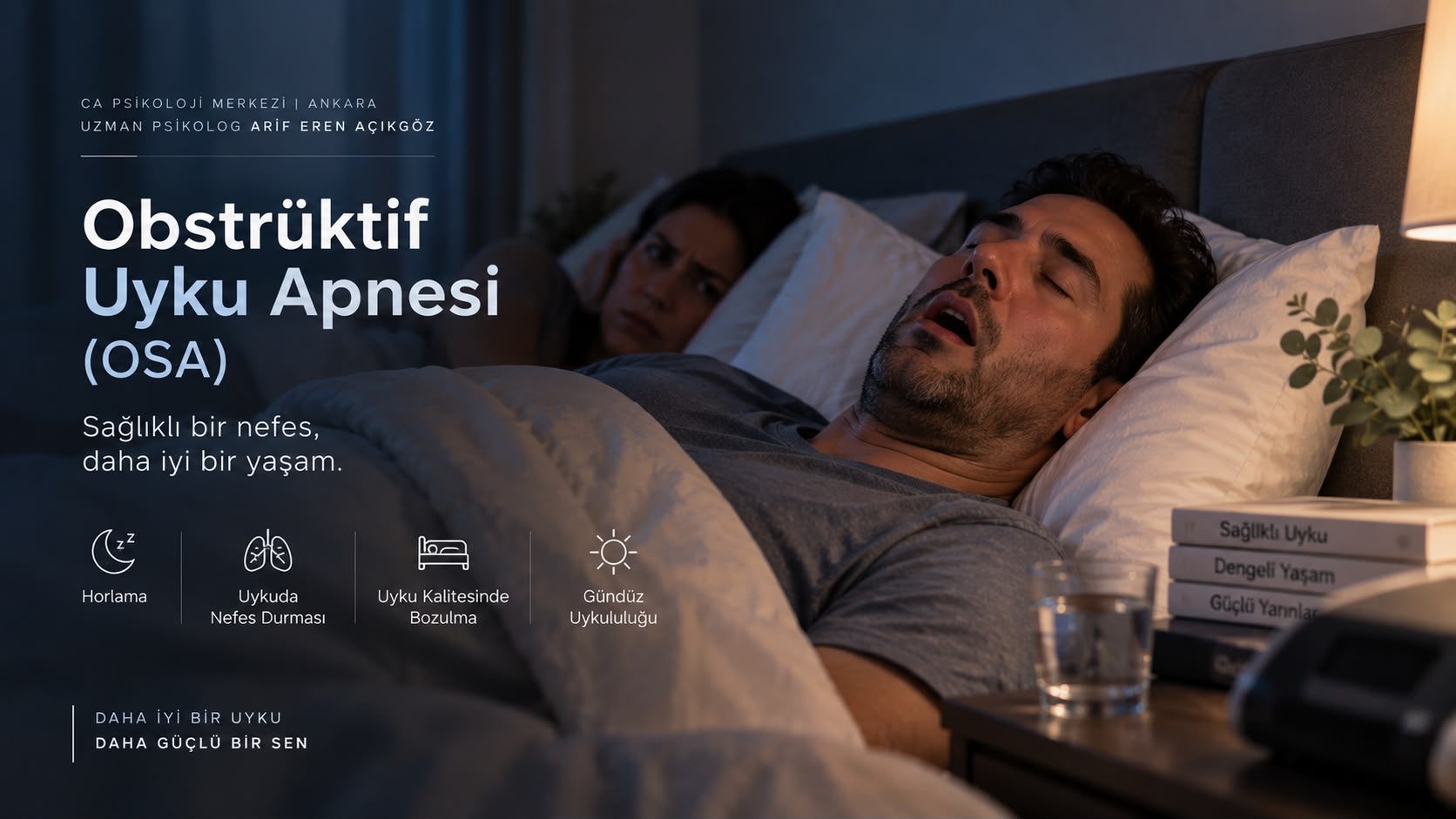
What is Obstructive Sleep Apnea (OSA)? Obstructive Sleep Apnea (OSA) is a sleep-related breathing disorder that occurs when airflow decreases or temporarily stops as a result of recurrent narrowing or closure of the upper airway during sleep. Repeated breathing events during the night can cause sleep disruption and affect the oxygen level in the blood. The person may not remember most of these awakenings, but may wake up unrested in the morning and experience significant drowsiness during the day. What are the Symptoms of Sleep Apnea? In obstructive sleep apnea, loud and regular snoring, noticing that breathing stops during sleep, feeling suffocated or out of breath, waking up frequently at night, dry mouth or headache in the morning, unrefreshed waking, excessive sleepiness during the day, difficulty in attention and concentration may be seen. Some people may not be aware of their respiratory arrest. Therefore, the observations of the spouse or family members may be important in the evaluation. What Causes Obstructive Sleep Apnea? In OSA, narrowing or closure occurs in the structures that protect the opening of the upper airway during sleep. Various factors may increase the risk, such as overweight, upper airway anatomy, large tonsils, features of the tongue and jaw structure, age and family history. However, the idea that sleep apnea occurs only in overweight people is not true. People with normal body weight may also experience OSA depending on anatomical or different risk factors. How is Sleep Apnea Diagnosed? The assessment begins with an examination of the person's symptoms, medical history, daytime sleepiness, snoring, and a history of witnessed apnea. The definitive diagnosis should not be based solely on symptoms or survey results. When necessary, polysomnography (PSG), in which sleep and respiratory parameters are recorded during the night, or home sleep apnea test with physician evaluation in appropriate patients can be used. In polysomnography, besides sleep stages, respiratory, airflow, respiratory effort, oxygen level in the blood, heart rate and various physiological parameters can be evaluated together. The Apnea-Hypopnea Index (AHI) is one of the main measures of the number of apnea and hypopnea events that occur within an hour during sleep. The AHI value alone does not explain the entire clinical condition of the person. It is important to evaluate the findings together with symptoms, oxygen levels, concomitant diseases, and other results of the sleep examination. How is Obstructive Sleep Apnea Treated? Treatment is planned according to the severity of OSA, anatomical features, symptoms, accompanying health problems and sleep examination results. Positive airway pressure (PAP) treatments are one of the basic options of OSA treatment. CPAP provides continuous positive airway pressure to help keep the airway open during sleep. APAP or different PAP methods can also be evaluated in appropriate patients. In addition, weight management, positional approaches in appropriate patients, intraoral appliances, and ENT or surgical evaluation when necessary can be found among the treatment options. Compliance with CPAP Treatment
In the success of CPAP treatment, it is important not only to have the device, but also to use it correctly and regularly. Mask compliance, air leakage, dry nose or mouth, difficulty getting used to pressure, and concerns about sleeping with the device may affect treatment compliance. For this reason, it is important to follow the use process of the person who started PAP treatment, to determine the difficulties he/she experienced and to make appropriate arrangements by the relevant health professionals when necessary. Why Is It Important When Untreated? Untreated sleep apnea is not limited to snoring or poor sleep quality. Daytime sleepiness may be associated with problems such as impaired attention and cognitive performance, as well as serious health problems such as hypertension, cardiovascular diseases, and stroke. Excessive daytime sleepiness, especially at the wheel or in jobs that require attention, is important for safety. When to Evaluate? If there is loud snoring, stopping breathing in sleep, waking up as if suffocating, significant daytime sleepiness or unrefreshed awakening in the morning, it is important to evaluate in terms of sleep apnea. The correct diagnosis and the appropriate treatment plan play an important role in improving sleep quality and daytime functionality. The statements in the symptoms and diagnosis section are in line with the current patient information of the NIH; and the PSG/HSAT distinction is in line with the AASM diagnostic guideline. CPAP provides positive pressure to keep the airway open; apart from PAP, intraoral appliances, lifestyle changes, and some surgical options may also be considered in appropriate patients.