
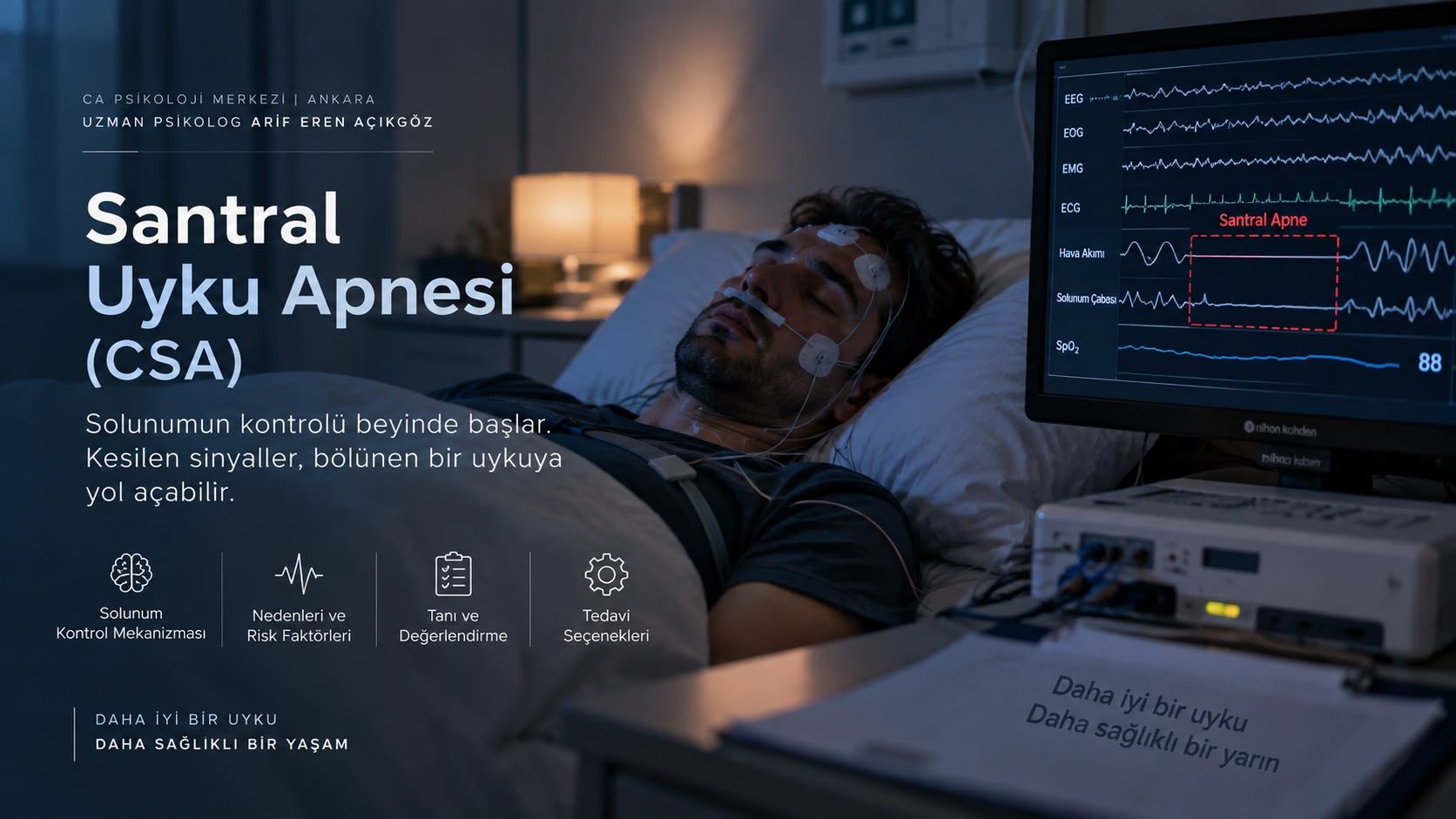
What is Central Sleep Apnea (CSA)? Central Sleep Apnea (CSA) is a sleep-related breathing disorder characterized by repetitive cessation or impairment of breathing during sleep. Unlike obstructive sleep apnea, the main problem is not the physical closure of the upper airway. During central apnea, the signals sent by the brain to the muscles that control breathing are temporarily insufficient and short-term loss of breathing effort may occur. What is the Difference Between Central Sleep Apnea and Obstructive Sleep Apnea? In Obstructive Sleep Apnea (OSA), although the person tries to breathe, the narrowing or closure in the upper airway prevents the airflow. In Central Sleep Apnea, the deterioration in the respiratory control mechanism is more prominent than airway obstruction. Therefore, the correct separation of the two diseases is important for the planning of the treatment. What are the symptoms? Recurrent breath stops during sleep, waking up with shortness of breath, frequent interruption of night sleep, difficulty falling or staying asleep, morning headaches, excessive daytime sleepiness, fatigue, difficulty concentrating and changes in mood may be seen. Although snoring can be seen in central sleep apnea, it may not be as pronounced as in obstructive sleep apnea. What are the Causes of Central Sleep Apnea? Central sleep apnea can occur for different reasons. Heart failure and some heart diseases, stroke and some neurological conditions affecting the brainstem, the use of opioid group drugs and being at high altitude may be associated with the development of central apnea. In some people, a clear cause may not be identified. In addition, central respiratory events may occur in some people after starting PAP treatment due to obstructive sleep apnea. This condition is called central sleep apnea that occurs with treatment. What is Cheyne-Stokes Respiration? In some cases of central sleep apnea, breathing may gradually decrease after deepening and accelerating, and then temporary respiratory arrest may occur. This periodic breathing pattern is called Cheyne-Stokes respiration and may be particularly associated with certain cardiac and neurological diseases. How to Diagnose In the evaluation of central sleep apnea, the person's sleep and medical history are examined in detail. Polysomnography (PSG) is an important diagnostic method for determining the type of respiratory events that occur during sleep. During polysomnography, brain activity, sleep stages, airflow, respiratory effort, oxygen level in the blood, heart activity and various physiological parameters can be recorded together. Especially in the separation of central and obstructive respiratory events, it is important to evaluate the respiratory effort together with the airflow. Altta yatan nedene göre kardiyoloji, nöroloji, göğüs hastalıkları veya diğer ilgili branşların değerlendirmesi de gerekebilir. Santral Uyku Apnesi Nasıl Tedavi Edilir? Tedavi her kişide aynı değildir. Öncelikle santral apneye neden olan veya katkıda bulunan durumun belirlenmesi önemlidir. Altta yatan kalp veya nörolojik hastalığın tedavisi, opioid kullanımının hekim tarafından yeniden değerlendirilmesi ve uygun hastalarda pozitif hava yolu basıncı tedavileri değerlendirilebilir. Bazı hastalarda CPAP veya belirli BPAP yöntemleri kullanılabilir. Uygun hastalarda adaptif servo-ventilasyon (ASV), oksijen tedavisi veya başka tedavi seçenekleri gündeme gelebilir. Ancak özellikle ASV her santral uyku apnesi hastası için uygun değildir. Eşlik eden kalp hastalıkları ve diğer klinik özellikler nedeniyle cihaz ve tedavi seçiminin uyku hekimi tarafından bireysel olarak yapılması gerekir. Ne Zaman Değerlendirme Yapılmalı? Uyku sırasında nefes durmalarının fark edilmesi, nefes darlığıyla uyanma, açıklanamayan yoğun gündüz uykululuğu veya sürekli bölünen ve dinlendirmeyen uyku varsa profesyonel değerlendirme yapılması önemlidir. Santral uyku apnesinde yalnızca solunum olaylarının tespit edilmesi değil, bu olayların neden ortaya çıktığının araştırılması tedavi planlamasının önemli bir parçasıdır. CSA’nın tanısında gece polisomnografisi kullanılabilir ve değerlendirmede kalp, akciğer ve beyin aktivitesi, solunum paterni ve oksijen düzeyleri gibi parametreler incelenebilir. Tedavi ise altta yatan nedene göre değişir; PAP yöntemleri, bazı hastalarda oksijen ve diğer tedaviler değerlendirilebilir.